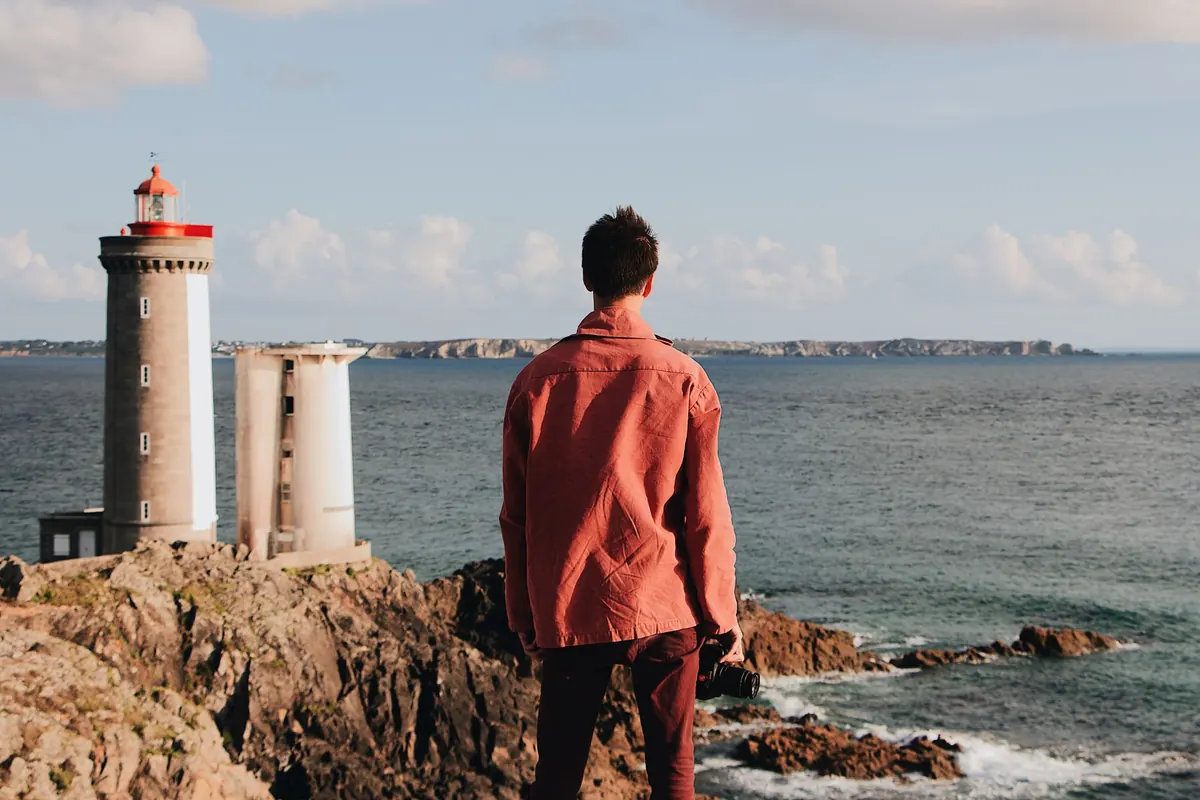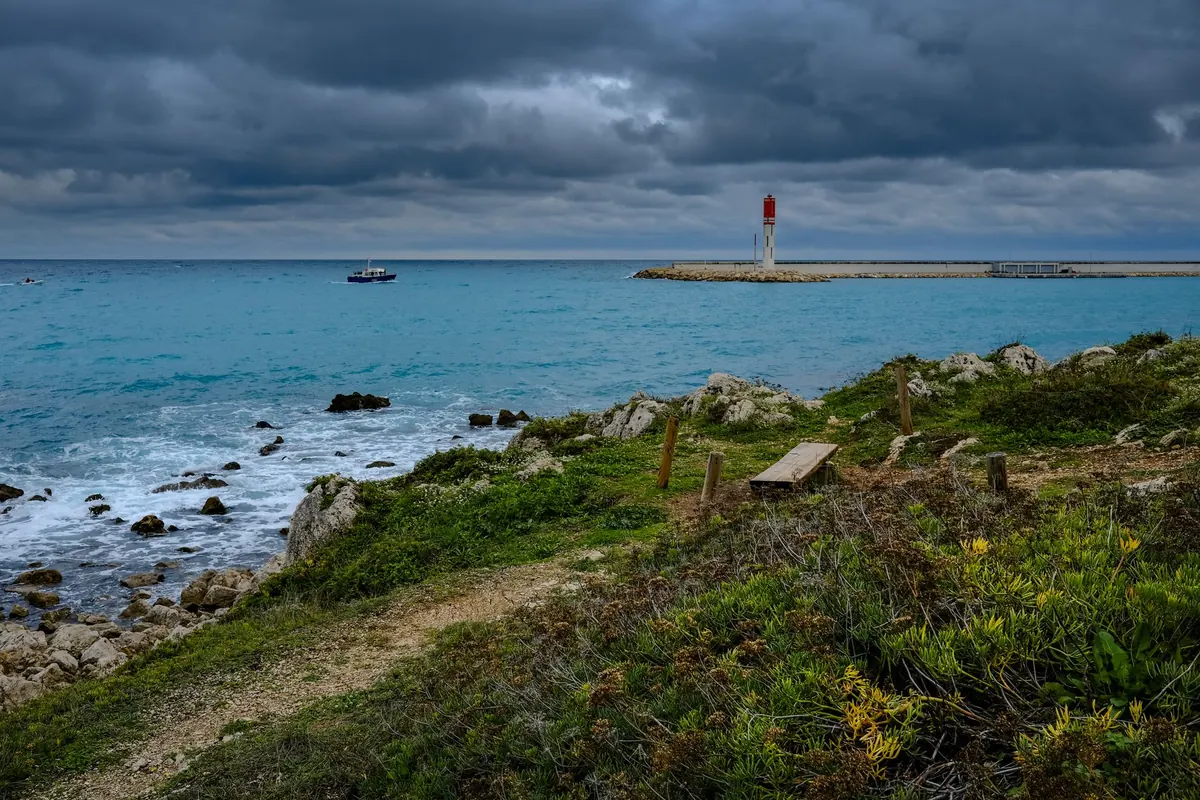
Winter changes the Tyrrhenian coast. The beach bars are shuttered, the ferries run a thinner timetable, and the sea that lapped politely at your ankles in August starts throwing itself at the shore. For lighthouse people, this is the season worth planning around. The light itself barely changes — a flash every few seconds, on and on — but everything around it does: the spray, the cloud, the light on the water. Here is how to watch it well, and come home dry.
Why the Tyrrhenian Coast Comes Alive in Winter
From October onward, low-pressure systems track across the Mediterranean and drag cold air over sea that is still relatively warm. That contrast feeds the kind of weather that makes the coast dramatic: fast-moving fronts, hard rain squalls, and long groundswells that arrive from the west and south-west with nothing in the way to slow them down.
What you get as a spectator is a coast that reads differently. Rocks that were sunbathing platforms in July become white water. Harbour moles that seemed oversized in calm weather suddenly look like exactly the right size. And because the Tyrrhenian shoreline faces west and south-west for much of its length, the dominant winter winds push swell straight at it. This is not the season for swimming or beachcombing. It is the season for standing somewhere solid, well back, and watching.
There is a practical bonus too. Winter light is lower and softer for longer, the coast is quiet, and the car parks that are impossible in August are empty. You will have the good viewpoints largely to yourself — which is also why you should be more careful than usual.
Read the Wind Before You Leave the House
Not every storm delivers. The difference between a disappointing afternoon and a memorable one is usually which wind is doing the work.
- Libeccio (south-west): the classic storm-watching wind on the upper Tyrrhenian. It arrives with little warning, builds fast, and drives swell onto the Tuscan and northern Lazio coast. If you have one window to pick, pick this.
- Maestrale (north-west): colder, drier, often clearer. Seas build more slowly but stay up for days, and the air tends to be scrubbed clean — good for sharp photographs and long views to the islands.
- Scirocco (south-east): warm, hazy, heavy. Often brings the strangest light and the biggest surf on south-facing stretches, but visibility suffers.
- Ostro (south) and Grecale (north-east): less reliable for drama on this coast, though Grecale can produce beautifully clean, cold mornings after a front has passed.
Check the regional marine forecast for wave height and period, and check the civil protection alert level for the area — Italian alerts run in colours, and an orange or red warning is a signal to change plans, not to hurry. A long-period swell of modest height often looks more impressive on arrival than a short, steep one, because the energy reaches further up the rocks.
Safe Places to Watch, From Tuscany to Campania
The single most useful rule: watch from above and behind, never from below or in front. Everything else is detail.
Upper Tyrrhenian
Livorno's Terrazza Mascagni is almost purpose-built for this — a wide, railed esplanade with the open sea in front and the harbour lights to the north. In Viareggio, the seafront and the landward end of the piers give you a view of broken water without putting you on the stones. Further south, the panoramic road that wraps around Monte Argentario puts you several hundred metres above the swell, with the lights of Porto Santo Stefano and Punta Lividonia below.
Lazio and the Pontine Islands
Civitavecchia's waterfront and the elevated streets above it work well; the long breakwater itself is often closed by the harbour authority during mareggiate, and it is not worth arguing about. At Anzio and Nettuno, the seafront promenades give a clean view of waves hitting the outer moles. On Ponza, the high lanes above the harbour are far better than the quay.
Campania and the far south
The terrace above Punta Carena on Capri is one of the great storm seats of the Mediterranean: high, railed, and pointed straight at the weather. On the mainland, Capo Miseno and the high points around the Sorrento peninsula offer similar elevation. Further down, Capo Vaticano in Calabria takes whatever the strait sends it, with big open views and plenty of height.
Wherever you go, keep these in mind: stay off wet rocks and any ledge the spray can reach, keep children within arm's reach, never turn your back on the sea to pose for a photograph, and remember that a single larger set can arrive without warning after several minutes of calm.
Lighthouses Worth Planning a Day Around
Most Italian lighthouses are automated and not open to visitors, so treat them as landmarks and anchors for a walk rather than as destinations you can enter. That is no loss. What you want is the geometry: a white tower, a dark sky, and a sea doing something violent behind it.
Talamone, on its rock below the village, is small and perfectly placed — the sort of light that looks best with grey weather behind it. Punta Lividonia above Porto Santo Stefano gives you a lighthouse plus a view down the Argentario coast. Capo Circeo sits on a headland that catches the full force of a Libeccio. And Punta Carena on Capri, with its red-and-white striped tower, is worth the walk even in rain.
Time your visit so the light is doing its job: dusk, dawn, or the middle of a squall, when the beam becomes visible in the murk.
Photographing Storms and Lighthouse Beams
- Decide what you are showing. Freezing spray needs a fast shutter — around 1/1000s or quicker — and a higher ISO. Turning the sea into mist needs a second or two on a tripod. One or the other. Trying to do both in the same frame gives you porridge.
- Shoot into the light. Backlit spray glows; front-lit spray looks like grey smoke. Position the sun, or the bright part of the sky, behind the wave.
- Expose for the spray, not the sky. White water against dark cloud blows out easily — check the histogram, and bracket if you are unsure.
- Protect the gear properly. A rain cover, a cloth in a dry pocket, and no lens changes in wind. Salt is the real enemy; wipe the barrel and filter before you pack up, not next week.
- Use a polariser, spare the ND. A polariser cuts glare on wet rock and deepens the sky between fronts. A strong ND is useful for long exposures on the beam, but in a gale the tripod will vibrate — hang a bag from the hook and keep the legs low.
- Stay for the gap after the front. The twenty minutes when the rain stops and sun breaks through is when the good frames happen: wet rock, dark cloud, rainbows, and a lighthouse suddenly lit like a stage prop.
Carry a plastic bag for the camera, a small towel, and a second pair of gloves. Winter storm-watching is a cold, wet business, and the person who is comfortable stays out for the good light.
Practical Notes Before You Set Out
Check the marine forecast and the regional alert level the same morning, and believe them. Tell someone where you are going and when you will be back, especially on quiet stretches of coast out of season. Park well away from cliffs and from anything that looks like it might come down — winter rain loosens rock and trees. Wear boots with grip, take a torch if you are staying for dusk, and accept that some days the sensible move is to watch from the car with a flask of coffee.
If you are planning around a specific lighthouse or a coastal path, it is worth a quick call to the local tourist office or harbour office to check what is open and what has been closed after recent weather. Conditions change fast, and local knowledge beats any plan made at home. Go carefully, go early, and let the sea do the dramatic part from a safe distance.
Photo: Eric Planet Olympus / Pexels